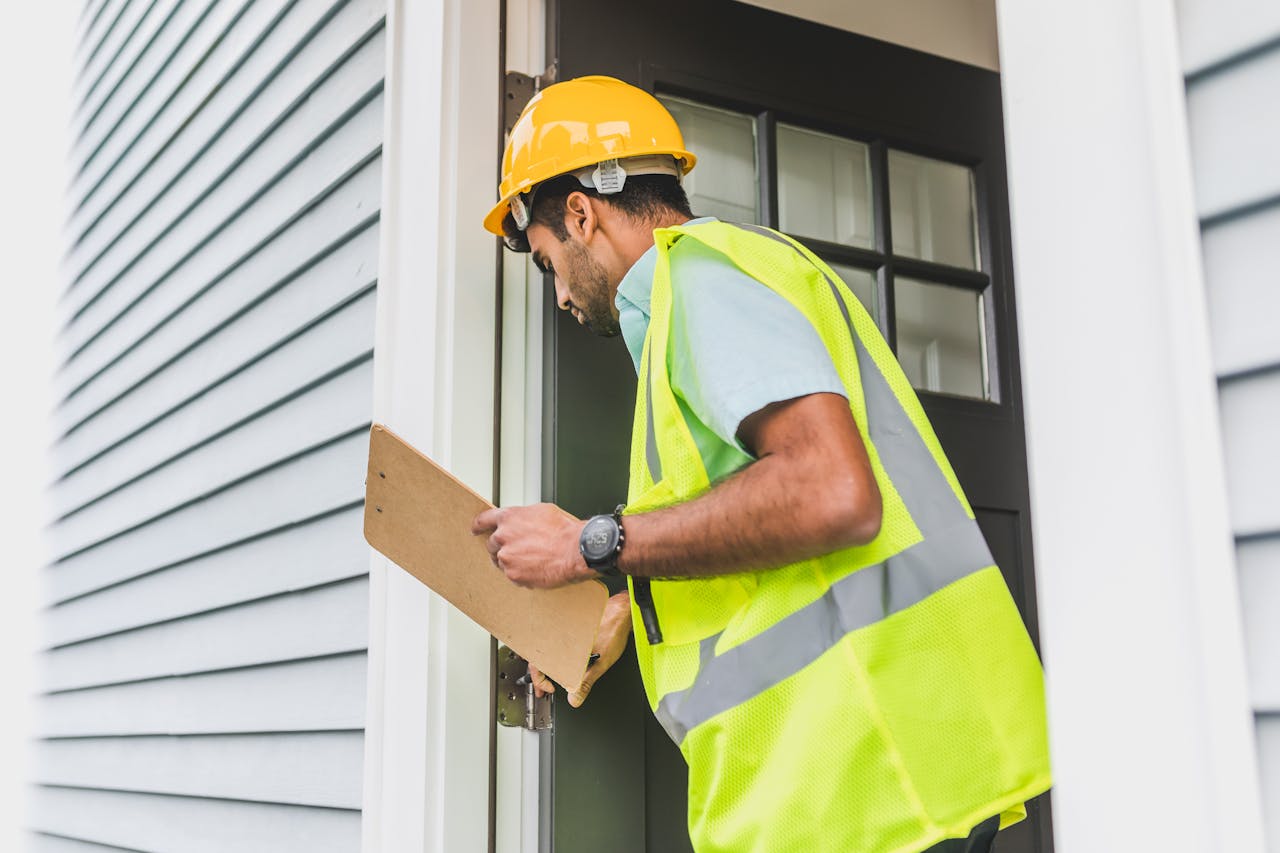


When purchasing a home in Carleton Place, buyers often pay close attention to the roof, foundation, electrical system, plumbing, heating equipment, and overall condition of the property. These are important components that can influence maintenance requirements and future repair expenses.
However, one structural feature that sometimes receives less attention is the basement support column.
Basement support columns play an important role in many residential buildings. They help transfer loads from beams and floor framing to the supporting foundation or footings below.
Although these columns may appear simple, their condition can affect the structural support of the floors above.
During a home inspection in Carleton Place, I examine accessible basement support columns for visible signs of corrosion, damage, movement, questionable installation, and other conditions that may require further evaluation.
I also consider the relationship between the columns, support beams, floor joists, basement floor, and surrounding foundation components.
My goal is to help buyers understand the visible condition of these structural elements and recognize when additional professional assessment may be appropriate.
Not every older support column needs replacement, and not every adjustable steel post is automatically defective. However, significant deterioration, unstable supports, or unusual structural modifications should not be ignored.
Understanding these conditions before closing can help buyers make informed decisions and prepare for potential maintenance or repairs.
Why Basement Support Columns Matter
A home’s structural system is designed to transfer loads through interconnected components.
Floor joists support the floors above.
Beams collect loads from joists and other structural elements.
Support columns transfer loads from beams to the foundation or supporting footings.
The foundation then transfers these loads to the supporting soil.
If one component is damaged, improperly supported, or significantly altered, it may affect the performance of other parts of the structure.
Basement support columns are therefore more than simple posts installed beneath a beam.
They are part of the building’s load-bearing system.
During a home inspection, I look for visible conditions that may affect their ability to perform their intended function.
I Begin by Identifying the Support Columns
One of the first things I do when inspecting an accessible basement is identify the visible support columns.
Some homes have a single column supporting a central beam.
Others have several columns positioned along the length of the basement.
Older Carleton Place homes may contain different support arrangements from newer properties.
I look at the number, location, and general configuration of the columns.
I also consider whether the arrangement appears original or has been modified.
However, I cannot determine the complete structural design through visual inspection alone.
I Identify the Type of Support Column
Basement support columns can be constructed from different materials.
Common examples include:
- Steel columns
- Adjustable steel posts
- Wood support posts
- Masonry columns
- Concrete columns
Each type has different characteristics and potential concerns.
During a home inspection in Carleton Place, I identify the general type of accessible support and examine its visible condition.
However, I do not assume that every column of a particular type is automatically adequate or inadequate.
Its suitability depends on the structural design and installation.
I Inspect Steel Support Columns
Steel columns are commonly used in residential basements.
They may be installed beneath wood or steel beams to transfer loads to the foundation.
I look for visible corrosion, damage, leaning, and questionable connections.
I also consider whether the column appears securely positioned.
Steel can provide substantial structural support when properly designed and installed.
However, deterioration or improper modifications may affect its performance.
I Look for Corrosion on Steel Columns
Basements can experience elevated humidity, condensation, and occasional water intrusion.
These conditions may contribute to corrosion of steel components.
I look for rust staining, flaking coatings, and deteriorated metal surfaces.
A small amount of surface rust may be primarily a maintenance concern.
However, extensive corrosion may indicate deterioration that requires further evaluation.
I consider the location and severity of the corrosion.
I Pay Attention to Corrosion Near the Column Base
The bottom of a steel column deserves particular attention.
Moisture may accumulate near the basement floor because of condensation, plumbing leaks, foundation seepage, or other sources.
I look for corrosion around the base plate and lower portion of the column.
Significant deterioration in this area may be more concerning than minor surface rust elsewhere.
If the base appears damaged or weakened, I recommend professional evaluation.
I Look for Corrosion Near the Top Connection
The upper connection between a support column and beam is another important area.
I look for visible rust, deterioration, damaged plates, and unusual movement.
Moisture exposure or previous repairs may affect these connections.
However, I cannot verify concealed fasteners or internal conditions through a standard visual inspection.
I Inspect Adjustable Steel Columns
Adjustable steel columns are sometimes installed in residential basements.
These columns may have threaded adjustment mechanisms that allow their height to be changed during installation.
Some adjustable columns are designed and approved for permanent structural use.
Others are intended only for temporary support.
I look at the visible design, condition, and installation.
However, I do not assume that every adjustable column is defective.
If its suitability for permanent use is uncertain, I recommend verification by a qualified professional.
I Look for Questionable Adjustable Post Installations
An adjustable post may raise concerns if it appears unstable, damaged, poorly connected, or positioned on an unsuitable supporting surface.
I look for unusual arrangements involving adjustment screws, plates, and column alignment.
I also consider whether the post appears to have been added during a previous renovation.
However, I do not adjust the post or attempt to determine its load capacity during the inspection.
I Do Not Adjust Basement Support Columns
Adjustable columns should not be altered casually.
Changing the height of a structural support can redistribute loads and affect beams, floors, walls, and other building components.
During a home inspection, I do not raise, lower, or reposition support columns.
If adjustment appears necessary, I recommend evaluation by a qualified structural professional.
I Inspect Wood Support Posts
Some older homes in Carleton Place contain wood support posts.
These may be original components or additions installed during previous repairs.
I look for cracking, splitting, moisture damage, decay, and unusual deformation.
I also consider whether the post appears adequately supported and connected.
Wood can remain serviceable for many years when properly protected and installed.
However, significant deterioration may affect its structural performance.
I Look for Wood Rot
Wood decay can develop when structural components experience prolonged moisture exposure.
I look for visible deterioration, discoloration, damaged fibres, and other signs of possible decay.
I pay particular attention to areas near the basement floor.
However, I do not perform destructive testing or dismantle structural components.
If significant decay is suspected, I recommend further evaluation.
I Look for Insect-Related Damage
Wood-destroying insects can sometimes affect basement framing and support posts.
I look for visible evidence of damaged wood, galleries, and other suspicious conditions.
However, a standard home inspection is not a comprehensive pest inspection.
If insect activity or damage is suspected, I recommend evaluation by an appropriately qualified specialist.
I Inspect Concrete and Masonry Columns
Some homes have concrete or masonry support columns.
I look for visible cracking, deterioration, displacement, and damaged joints.
Masonry columns may contain brick, block, or other materials.
The significance of cracking depends on the construction and the condition of the supporting system.
If substantial deterioration or movement is visible, further structural evaluation may be appropriate.
I Look for Cracking in Masonry Supports
Cracks may develop in masonry for several reasons.
Some may be associated with shrinkage or minor material changes.
Others may indicate movement or loading concerns.
I look at the size, pattern, and location of visible cracks.
I also consider whether the supported beam or nearby floor shows related movement.
However, I do not diagnose the exact cause through visual inspection alone.
I Look for Columns That Are Leaning
A support column should generally be positioned according to the structural design.
A column that appears noticeably tilted or displaced deserves attention.
I look for visible leaning and consider whether the beam above appears to have shifted.
Possible contributing factors may include movement, improper installation, or damaged connections.
However, I do not determine the exact cause without further investigation.
Significant leaning may require structural assessment.
I Look for Columns That Appear Bent
Steel columns may become visibly deformed under certain conditions.
I look for bending, buckling, dents, and unusual distortion.
A bent column may indicate that the component has experienced damage or loading beyond its intended performance.
However, not every minor surface imperfection affects structural adequacy.
If significant deformation is visible, I recommend evaluation by a structural engineer.
I Inspect the Connection Between the Column and Beam
The connection at the top of a support column is important because it transfers loads from the beam to the column.
I look for visible separation, displacement, damaged plates, and questionable contact.
Some systems use welded or bolted connections.
Others have different bearing arrangements.
I do not assume that every connection must look identical.
The appropriate detail depends on the structural design.
I Look for Inadequate Beam Bearing
A beam should transfer its load appropriately to the supporting column.
I look for visible conditions suggesting insufficient contact or unusual positioning.
For example, a column that appears offset from its intended bearing location may require evaluation.
However, I do not calculate the required bearing area during a standard home inspection.
If the arrangement appears questionable, I recommend professional assessment.
I Look for Damaged Top Plates
Some columns have steel plates at their upper ends.
These plates may help distribute loads or form part of the connection.
I look for visible damage, deformation, corrosion, and displacement.
However, the presence or absence of a particular plate does not automatically establish whether an installation is acceptable.
The requirements depend on the column and structural design.
I Inspect the Column Base
The bottom of the column transfers loads to the supporting structure beneath it.
I look for visible movement, corrosion, damaged base plates, and unusual positioning.
I also consider the condition of the surrounding concrete floor.
However, the actual footing may be concealed beneath the basement slab.
I cannot verify its dimensions or construction through a standard visual inspection.
I Look for Cracking Around the Column Base
Cracking in the basement floor near a support column may deserve attention.
I look for cracks, settlement, and changes in elevation.
However, basement floor slabs may crack for reasons unrelated to structural column support.
I do not assume that every slab crack indicates footing failure.
I consider the complete pattern of visible conditions.
I Look for Settlement Around Support Columns
If the supporting footing or underlying soil moves, the column may change position.
This can affect the beam and floors above.
I look for visible settlement, unusual gaps, and related floor movement.
However, I cannot confirm the condition of concealed footings or soil through visual inspection alone.
Significant movement may warrant engineering evaluation.
I Do Not Assume the Basement Slab Is the Footing
This is an important distinction for buyers.
A basement floor slab and a structural footing are not necessarily the same component.
Support columns may require dedicated footings designed to carry concentrated loads.
These footings are often concealed beneath the slab.
I cannot confirm that an appropriate footing exists simply because a column appears to rest on concrete.
If the support arrangement is questionable, further evaluation may be necessary.
I Look for Columns Installed Directly on Finished Flooring
Some basement renovations include flooring installed around structural columns.
I consider whether the column appears to be supported by an appropriate structural surface rather than relying on finish flooring.
However, the actual bearing arrangement may be concealed.
If the installation appears questionable, I recommend professional evaluation.
I Inspect Main Support Beams
Support columns work together with beams.
A column may appear sound while the beam above shows significant deterioration.
During a home inspection in Carleton Place, I examine accessible beams for visible sagging, cracking, corrosion, and damage.
I also consider whether the beam appears properly supported.
The condition of the column cannot be evaluated completely without considering the beam it supports.
I Look for Sagging Beams
A visibly sagging beam may indicate long-term deflection, inadequate support, deterioration, or other concerns.
I look at the beam’s general alignment and condition.
I also consider whether the support columns appear to have moved.
However, I do not determine structural load capacity through visual inspection alone.
Significant deflection may require engineering assessment.
I Inspect Wood Beams
Wood beams may be constructed from solid lumber, built-up dimensional lumber, or engineered wood products.
I look for cracking, splitting, moisture damage, and questionable modifications.
I also consider whether the beam appears to have adequate bearing at visible support locations.
However, concealed connections and internal conditions may not be accessible.
I Inspect Steel Beams
Some homes have steel beams supported by basement columns.
I look for corrosion, visible deformation, and damaged connections.
Steel beams can provide substantial support, but their performance depends on the complete structural arrangement.
If significant damage or unusual movement is present, I recommend further evaluation.
I Look for Beam-to-Column Separation
A visible gap between a beam and its intended support may indicate a concern.
I look for whether the column appears to be maintaining proper contact.
However, I do not assume that every visible space represents a defect without understanding the connection design.
If the arrangement appears unusual, professional assessment may be necessary.
I Inspect Accessible Floor Joists
Floor joists transfer loads to beams and supporting walls.
I inspect accessible joists for visible sagging, deterioration, and questionable modifications.
I also consider whether the floor above shows related unevenness.
A damaged joist may create localized floor concerns even when the main support columns remain intact.
I Look for Floor Unevenness Above the Columns
One of the ways I evaluate basement supports is by observing the floors above.
I look for noticeable slopes, dips, and unusual movement.
A floor that sags near a beam may suggest that the support system deserves closer attention.
However, floor unevenness can have several causes.
I do not automatically attribute every uneven floor to a defective basement column.
I Look for Excessive Floor Bounce
Some floors feel unusually flexible or springy during normal walking.
This may be related to floor framing, span lengths, deterioration, or other factors.
I observe how accessible floors respond to normal use.
However, I do not perform structural load testing.
If movement appears excessive, I consider the accessible support system and recommend further evaluation when appropriate.
I Look for Cracks in Interior Walls
Structural movement can sometimes be accompanied by cracking in nearby wall finishes.
I look for diagonal cracks, separation, and other unusual conditions.
However, drywall and plaster may crack because of shrinkage, temperature changes, or routine building movement.
I consider whether the cracking appears related to other structural observations.
I Look for Doors That Do Not Operate Properly
Doors may begin sticking or rubbing when surrounding framing changes position.
During a home inspection, I operate accessible doors and look for unusual alignment.
However, door problems can also result from humidity, loose hinges, or installation defects.
I do not assume that every sticking door indicates support column movement.
I Look for Gaps Around Trim
Gaps between baseboards, floors, and wall finishes may sometimes accompany structural movement.
I look for unusual separation and consider whether nearby floors appear uneven.
However, trim gaps can also result from flooring renovations or material shrinkage.
I evaluate the complete pattern rather than one isolated condition.
I Look for Ceiling Cracks Near Support Beams
In finished basements, support beams may be concealed within bulkheads or ceilings.
I look for cracking, sagging, and unusual separation in surrounding finishes.
However, these conditions do not automatically establish a structural defect.
Concealed framing cannot be fully evaluated without opening the finished surfaces.
I Consider Previous Basement Renovations
Many homeowners finish their basements to create additional living space.
Renovations may conceal support columns, beams, and other structural components.
I look for visible evidence of modifications.
I also consider whether structural elements appear to have been altered.
However, finished walls and ceilings may prevent direct inspection.
I Look for Removed Support Columns
Some renovations involve removing or relocating columns to create more open space.
Removing a structural column changes the load distribution within the building.
An appropriately designed replacement support system may be necessary.
I look for visible evidence of major alterations.
If a column appears to have been removed or the support arrangement is questionable, I recommend reviewing available structural documentation and obtaining professional evaluation.
I Look for Added Support Columns
Some older homes contain columns that appear to have been installed after original construction.
These may have been added to address floor sagging or other concerns.
An added column is not automatically defective.
However, I look at its visible condition, connections, and support arrangement.
I also consider whether the original issue may still be present.
I Look for Improvised Structural Repairs
Older homes sometimes contain repairs completed without clear documentation.
These may include added wood posts, adjustable supports, or modified beams.
I look for unusual materials, damaged connections, and visibly incomplete work.
A repair that has been in place for many years is not necessarily structurally adequate.
If the arrangement appears questionable, further evaluation may be appropriate.
I Look for Temporary Supports
Temporary construction supports may sometimes remain in basements after renovation work.
Certain adjustable posts are intended for temporary use rather than permanent structural support.
I look for visible characteristics that may raise questions about the intended use.
However, I do not classify every adjustable post as temporary based solely on appearance.
A qualified professional may need to verify the product and installation.
I Consider the Age of the Home
Carleton Place includes established residential areas with homes built during different periods.
Older properties may contain structural materials and support arrangements that differ from modern construction.
Some original components may remain in satisfactory condition.
Others may have experienced deterioration or modifications.
I evaluate the visible condition rather than assuming that older structural components are automatically defective.
I Look for Evidence of Long-Term Movement
One challenge when inspecting older homes is determining whether structural movement occurred recently or over many years.
A single inspection generally cannot establish the rate of movement.
However, I look for visible clues such as repeated repairs, unusual cracking, and altered supports.
These observations may suggest that movement has occurred.
They do not necessarily establish whether the movement is ongoing.
I Do Not Assume Old Movement Is Harmless
Buyers are sometimes told that a sloping floor or sagging beam is normal because the house is old.
Age can explain certain changes, but it does not automatically make every condition acceptable.
Significant deterioration, unstable supports, or questionable structural modifications deserve attention regardless of the home’s age.
I evaluate the actual evidence.
I Do Not Assume Every Older Column Needs Replacement
The opposite assumption can also be misleading.
Some older support columns remain serviceable for decades.
A column with limited surface corrosion may not require replacement.
A properly installed wood post may continue functioning adequately.
I do not recommend major structural work based on age alone.
The significance depends on the condition and installation.
I Consider Basement Moisture Conditions
Basement moisture can affect support columns and nearby framing.
I look for staining, condensation, corrosion, and deterioration.
I also consider whether the basement shows evidence of water intrusion.
A damp environment may contribute to long-term material damage.
However, I do not assume that every structural concern was caused by moisture.
I Look for Water Damage Near Columns
Water may collect near support columns because of plumbing leaks, foundation seepage, or other sources.
I inspect accessible areas for moisture-related staining and deterioration.
If the column is made of steel, I look for corrosion.
If it is made of wood, I look for decay.
I also consider whether nearby flooring or framing has been affected.
I Inspect the Surrounding Basement Floor
The basement floor may provide useful context when evaluating support columns.
I look for significant cracking, settlement, and changes in elevation.
However, the floor slab may be separate from the structural footing.
I do not assume that a crack near a column proves that the footing has failed.
I Consider Foundation Conditions
Support columns transfer loads to the supporting foundation system.
If the foundation or supporting soil experiences significant movement, the columns and beams may be affected.
I inspect accessible foundation components for visible cracking, displacement, and deterioration.
However, I do not perform geotechnical testing or calculate foundation bearing capacity.
I Look for Related Foundation Cracking
Foundation cracks can develop for several reasons.
Some may be associated with shrinkage or minor movement.
Others may indicate more significant conditions.
I look at the size, pattern, and location of visible cracks.
I also consider whether the support columns and floors show related movement.
If substantial concerns are present, I recommend further evaluation.
I Consider Soil Settlement
The supporting soil beneath a footing can influence structural performance.
Settlement may occur because of soil consolidation, moisture changes, or other conditions.
However, I cannot determine soil properties through a standard visual home inspection.
If significant movement appears to involve the supporting foundation, a structural or geotechnical assessment may be appropriate.
I Look for Evidence of Previous Structural Adjustments
Some support columns may have been adjusted during previous repairs.
I look for unusual positioning, modified plates, and other visible changes.
However, I cannot determine whether a column has been adjusted simply from its appearance.
If adjustment history is relevant, buyers may benefit from reviewing available repair records.
I Consider Whether Columns Have Been Concealed
Finished basements may contain decorative enclosures around structural columns.
These enclosures can improve appearance but limit inspection access.
I cannot verify the condition of concealed columns without removing finishes.
If significant structural concerns are visible elsewhere, further investigation may be appropriate.
I Do Not Remove Decorative Column Covers
My inspection is visual and non-invasive.
I do not remove permanently installed finishes, dismantle enclosures, or open walls to inspect concealed structural components.
I document limitations when they affect the assessment.
I Do Not Perform Structural Load Calculations
A standard home inspection does not include calculating the load capacity of columns, beams, or footings.
I do not determine whether a column is adequately sized through visual inspection alone.
If the installation appears questionable, I recommend evaluation by a qualified structural engineer.
I Do Not Verify Concealed Footing Dimensions
The footing beneath a support column may be hidden under the basement slab.
I cannot determine its size, depth, reinforcement, or bearing capacity without invasive investigation.
A column may appear stable while the footing details remain unknown.
I explain this limitation when necessary.
I Do Not Guarantee Future Structural Performance
A support column may appear satisfactory during the inspection but develop problems later.
Future performance depends on loading, moisture exposure, material condition, and other factors.
I cannot predict exactly whether a component will deteriorate or move.
My assessment is based on visible conditions at the time of inspection.
I Look for Patterns Rather Than One Isolated Defect
One observation rarely tells the entire story.
For example, minor surface rust on a steel column may be a maintenance concern.
However, extensive corrosion, visible column deformation, and significant beam sagging may indicate a more substantial issue.
Similarly, a small basement floor crack may be unrelated to structural support.
A column that appears displaced above a settled floor area may require closer investigation.
I consider the complete pattern of evidence.
I Separate Routine Maintenance From Significant Structural Concerns
Some observations may involve relatively straightforward maintenance.
Examples include:
- Minor surface corrosion
- Damaged protective paint
- Limited moisture staining
- Cosmetic finish deterioration
- Minor surface imperfections
More significant concerns may include:
- Severe corrosion
- Bent or buckled columns
- Significant leaning
- Damaged beam connections
- Questionable adjustable posts
- Deteriorated wood supports
- Visible settlement
- Improvised structural repairs
- Missing or altered supports
- Significant beam deflection
I evaluate the extent of the condition before making recommendations.
When I Recommend a Structural Engineer
Further evaluation may be appropriate when I observe significant deterioration, unstable columns, questionable structural modifications, or related movement.
A structural engineer can assess the load-bearing system and determine whether repairs or reinforcement are necessary.
I do not recommend engineering evaluation for every minor cosmetic defect.
However, significant concerns involving structural support deserve appropriate professional attention.
When I Recommend a Qualified Contractor
Some repairs may involve replacing deteriorated materials, improving connections, or addressing moisture-related damage.
A qualified contractor may perform the work.
However, significant structural modifications should be based on an appropriate design or professional assessment.
I do not recommend simply replacing or adjusting a support column without understanding the loads it carries.
I Encourage Buyers to Ask About Previous Structural Repairs
Before closing, buyers may benefit from asking the seller about the basement’s structural history.
Useful questions include:
- Have any support columns been replaced?
- Were additional columns installed?
- Have columns been relocated?
- Were structural walls removed?
- Has the basement experienced settlement?
- Have support beams been repaired?
- Has the floor above experienced sagging?
- Are engineering reports available?
- Were permits obtained for structural renovations?
- Are contractor invoices or repair records available?
These answers can provide useful context.
However, I do not assume that every statement can be verified during a visual inspection.
I Encourage Buyers to Review Renovation Documentation
If significant structural changes have been made, available documentation can be valuable.
Engineering drawings, permits, and contractor records may help explain why columns were added, removed, or modified.
However, documentation does not replace evaluating the actual condition of the building.
I consider the visible evidence and recommend further evaluation when appropriate.
I Encourage Buyers to Attend Their Home Inspection
Whenever possible, I encourage buyers to attend their home inspection in Carleton Place.
Structural concerns are often easier to understand when I can show the components directly.
I may point out a support column, beam connection, corrosion, or visible movement.
I can also explain how the column works with the floor framing and foundation.
This helps buyers understand the property before closing.
The Inspection Report Provides a Useful Record
After completing the inspection, I document significant observations.
Depending on the condition, the report may include photographs and recommendations for further evaluation.
Buyers can use this information when speaking with contractors, structural engineers, or their real estate representative.
The report also provides a reference for future maintenance.
Why Buyers Should Investigate Significant Concerns Before Closing
Support column repairs can vary considerably in complexity.
A minor protective coating issue is different from replacing a damaged structural column.
A questionable adjustable post may require professional verification.
A settled footing may involve more extensive structural work.
If significant concerns are identified, understanding the underlying condition before closing can help buyers make informed decisions.
I encourage qualified assessments and written estimates when appropriate.
Repair Costs Depend on the Structural Problem
The cost of correcting basement support concerns depends on the actual condition.
Possible work may involve:
- Corrosion treatment
- Column replacement
- Beam reinforcement
- Connection repairs
- Footing evaluation
- Foundation repairs
- Structural redesign
- Moisture control improvements
I do not provide contractor repair estimates during a standard home inspection.
When significant defects are observed, I recommend obtaining professional assessments and written estimates.
I Encourage Homeowners to Monitor Structural Changes
After moving into a Carleton Place home, homeowners should pay attention to changes involving basement supports and the floors above.
Important signs include:
- Increasing floor sagging
- New cracks in nearby walls
- Significant corrosion
- Visible column movement
- New gaps at beam connections
- Moisture-related deterioration
- Changes in basement floor elevation
- Doors that suddenly begin sticking
- Unusual movement in the floor framing
Significant changes should be investigated rather than ignored.
Basement Moisture Management Matters
Maintaining appropriate basement moisture conditions can help protect structural materials.
Homeowners should address plumbing leaks, foundation seepage, and persistent condensation.
Proper exterior drainage and maintenance may also help reduce moisture exposure.
However, moisture control alone will not correct an inadequate structural support system.
The actual cause of deterioration or movement should be identified before repairs are selected.
Why Home Inspection Cost Should Be Considered in Context
Buyers often search for Home Inspection Cost, Home Inspection Carleton Place, or Home Inspection Near Me when preparing to purchase a property.
While inspection cost is an understandable consideration, the value of a home inspection involves understanding the condition of the building and recognizing concerns that may require attention.
Basement support columns are a good example.
A column may look simple, but it can carry substantial loads from the floors above.
Minor surface corrosion may be a maintenance concern.
A damaged connection may require repair.
A significantly leaning or deteriorated column may require structural evaluation.
A detailed visual inspection can help buyers recognize these differences and understand when specialized assessment is appropriate.
What I Want Carleton Place Buyers to Understand
Before closing, I want buyers to know whether I observed concerns involving:
- Steel column corrosion
- Wood post deterioration
- Masonry support cracking
- Leaning or displaced columns
- Bent or damaged supports
- Adjustable steel posts
- Questionable beam connections
- Column base deterioration
- Basement floor settlement
- Beam sagging
- Floor unevenness
- Previous structural modifications
- Moisture-related damage
- Concealed support limitations
More importantly, I want buyers to understand what these observations may mean.
Not every older column requires replacement.
Not every adjustable post is defective.
However, significant deterioration, questionable support arrangements, and related structural movement should not be ignored.
Basement Support Columns Should Be Evaluated as Part of the Entire Structure
One of the most important things I explain is that a support column does not function independently from the rest of the building.
It works with beams, joists, walls, footings, and the foundation.
A column may appear sound while the beam above is deteriorated.
A beam may be in reasonable condition while the support beneath it has moved.
A basement floor crack may be unrelated to structural support, or it may accompany a more significant condition.
That is why I evaluate the complete accessible system rather than concentrating only on the column itself.
Understanding the relationship between these components helps buyers recognize the importance of proper structural support.
Final Thoughts
Basement support columns are important structural components in many homes throughout Carleton Place.
They help transfer loads from beams and floor framing to the supporting foundation system.
Although they may not be as noticeable as other building components, their condition deserves careful attention during the home-buying process.
During a home inspection in Carleton Place, I examine accessible support columns for visible corrosion, deterioration, movement, damaged connections, questionable modifications, and other concerns.
I also consider the condition of nearby beams, floor joists, basement flooring, and accessible foundation components.
A small amount of surface rust may require routine maintenance.
A deteriorated wood post may require further evaluation.
A questionable adjustable column may need professional verification.
A significantly leaning or damaged support may require structural assessment.
Each condition needs to be considered in context.
I do not assume that every older column is defective.
I do not guarantee the condition of concealed footings or structural connections.
And I do not calculate structural load capacity during a standard home inspection.
Instead, I evaluate the visible evidence, explain potential concerns, document significant findings, and recommend qualified professional evaluation when appropriate.
For buyers searching for Home Inspection Carleton Place, Home Inspection Ottawa, or Home Inspection Near Me, understanding the condition of basement support columns before closing can help identify maintenance needs and potential structural concerns.
My goal is to help buyers recognize the difference between routine deterioration and conditions that may require specialized assessment.
Whether I am inspecting an older Carleton Place home with original wood support posts or a newer property with steel columns, I believe that evaluating accessible structural supports is an important part of understanding the building’s overall condition.
A home’s structural system depends on components working together to transfer loads safely and effectively.
By identifying visible concerns during the inspection process, I help Carleton Place home buyers make informed decisions, prepare for future maintenance, and approach homeownership with a clearer understanding of the property they are purchasing.