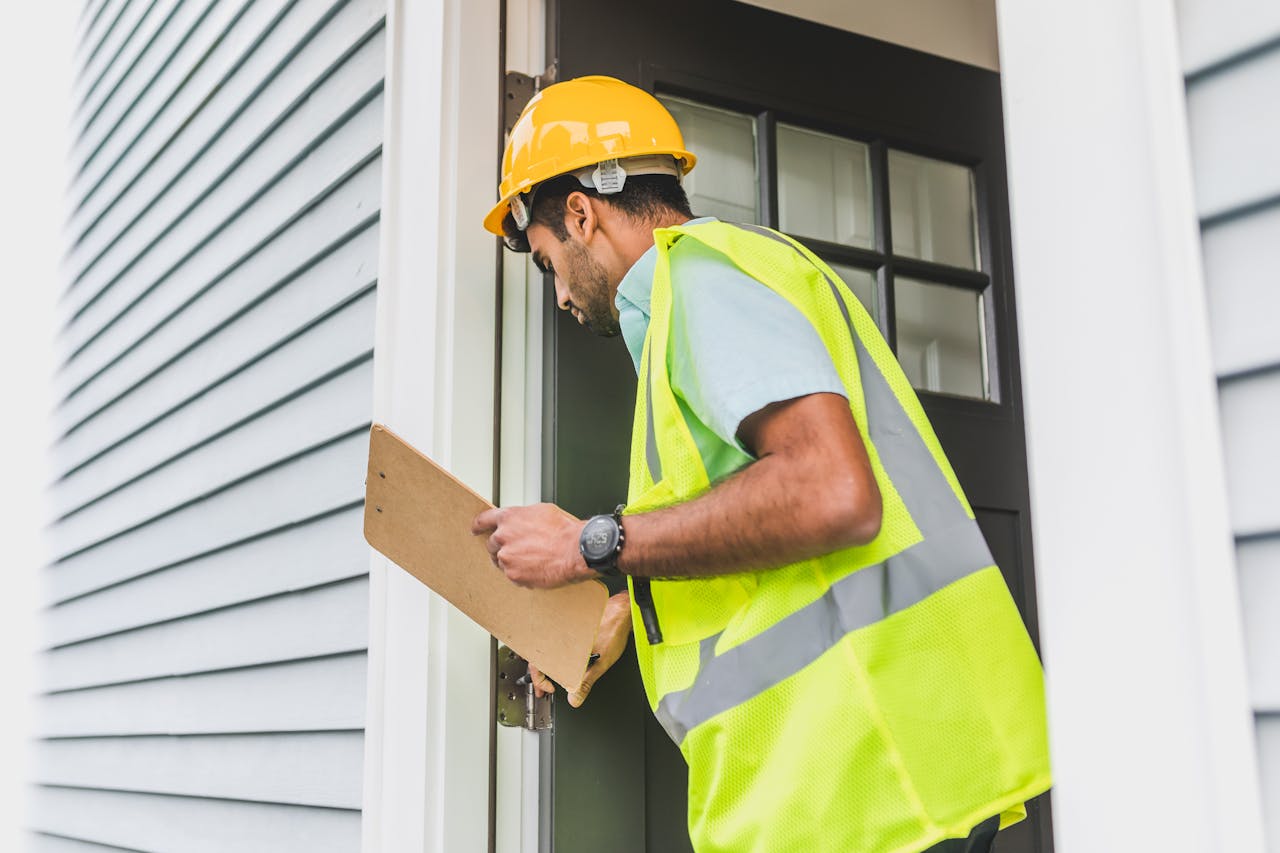


When most homeowners in Kanata or Stittsville think about windows, they think about comfort and appearance. They think about how much light comes in, whether the frames look modern, and whether the glass feels energy efficient.
But in the homes I inspect across Kanata and Stittsville, windows are rarely a problem because they’re old or unattractive.
They become a problem because of something far more important:
how they were installed.
A window is not just a piece of glass in a frame. It’s an engineered opening in the most protective part of your home — the exterior wall system. And when that opening is installed incorrectly, the damage doesn’t always show up right away.
In fact, the most expensive window-related problems are the ones that develop quietly over years:
- Moisture moving into wall cavities
- Slow structural rot forming behind trim
- Drafts worsening each winter
- Condensation becoming chronic
- Mold developing in insulation
- Energy bills climbing for reasons homeowners can’t explain
In this long-form guide, I want to explain exactly how poor window installation creates long-term problems in Kanata and Stittsville homes, why these issues are so common, and what signs I look for during inspections long before damage becomes obvious.
Windows Are Openings in Your Home’s Protective Shell
Every exterior wall in a home serves one main purpose:
to separate indoors from outdoors.
Walls manage:
- Water
- Air movement
- Heat loss
- Humidity control
- Structural stability
Windows interrupt that protective barrier. That means window openings must be installed as complete systems, not just inserted and sealed.
A properly installed window should do three things over decades:
- Keep bulk water out
- Allow incidental water to drain safely
- Prevent uncontrolled air leakage
When any of those functions fail, long-term problems begin.
Why Window Problems Are Especially Common in Kanata and Stittsville
Kanata and Stittsville homes experience conditions that make window installation errors much more damaging than people expect.
These areas face:
- Long heating seasons
- Strong winter temperature gradients
- Wind-driven rain during storms
- Freeze-thaw cycles that stress exterior seals
- High indoor humidity during cold months
- Rapid suburban development where installation speed sometimes matters more than precision
Even small installation flaws become amplified when weather repeatedly tests the building envelope.
In this region, windows are under constant pressure — literally and physically.
The Biggest Myth: “If It Looks Sealed, It Must Be Fine”
One of the most common assumptions homeowners make is that if a window looks neat, caulked, and finished, it must be properly installed.
But window failures are rarely visible on day one.
Poor installation usually causes damage in stages:
- Stage 1: Air leakage begins invisibly
- Stage 2: Condensation forms seasonally
- Stage 3: Moisture enters wall cavities
- Stage 4: Insulation degrades and mold develops
- Stage 5: Structural wood begins to rot
- Stage 6: Interior finishes finally show symptoms
By the time homeowners see staining or softness, the issue has often existed for years.
Problem #1: Installation That Relies on Caulking Instead of Drainage Design
Caulking is often treated like a permanent waterproof solution.
It isn’t.
Caulking is temporary. It is exposed to:
- UV breakdown
- Expansion and contraction
- Wind stress
- Ice buildup
- Aging and shrinkage
In Kanata and Stittsville winters, sealants are stressed constantly.
When installation depends on caulk alone, the window has no secondary water management strategy. Once the caulk fails, water has nowhere safe to go.
A correctly installed window assumes water will eventually get behind the exterior surface — and it plans for that reality through drainage and flashing.
A poorly installed one does not.
Problem #2: Missing Flashing That Allows Water Into Wall Systems
Flashing is one of the most critical parts of window installation, yet it’s also one of the most commonly overlooked.
Flashing is what directs water outward and away from the wall assembly.
Without proper flashing, rainwater can travel behind siding and enter the rough opening.
This leads to slow moisture damage that homeowners rarely notice until it becomes structural.
In inspections, flashing failures often result in:
- Rotting sill plates beneath windows
- Mold growth inside insulation
- Staining that appears far below the window
- Warping trim months after heavy rain
- Chronic dampness around exterior walls
The window may not leak dramatically. It simply feeds moisture into the wall system over time.
Problem #3: Poor Insulation Around the Window Frame
Many installation issues aren’t about water at all — they’re about air and temperature.
If insulation around a window opening is incomplete, compressed, or missing, the frame becomes a cold zone.
Cold zones cause:
- Drafts
- Heat loss
- Condensation on interior surfaces
- Moisture accumulation in surrounding drywall
In Stittsville homes, I often find window corners that remain colder than the rest of the wall, especially in winter.
This isn’t because the window glass is failing.
It’s because the installation left thermal gaps in the wall envelope.
Problem #4: Air Leakage That Creates Moisture Movement
Air leakage is one of the most underestimated consequences of poor window installation.
When warm indoor air leaks into wall cavities during winter, it carries moisture with it.
That moisture then condenses when it hits cold exterior surfaces.
This creates hidden wetting inside walls — even when no rainwater enters.
Over time, this leads to:
- Damp insulation
- Mold inside cavities
- Reduced energy efficiency
- Odours that come and go seasonally
- Premature wall deterioration
Many homeowners blame humidity, but the real issue is uncontrolled air movement through the window opening.
Problem #5: Improper Replacement Windows That Disrupt the Original Wall System
Many Kanata and Stittsville homes have undergone window replacements over the last decade.
Replacement projects often focus on speed:
- Old window out
- New window in
- Trim installed
- Caulk applied
- Job done
But replacement windows require careful integration with existing wall layers.
During inspections, I frequently find:
- Old flashing left behind
- Drainage planes interrupted
- New windows installed without proper membrane continuity
- Gaps hidden behind interior trim
- Exterior cladding covering weep pathways
A replacement window can actually introduce new moisture risk if the opening wasn’t rebuilt properly.
New does not automatically mean correct.
Problem #6: Blocked Weep Holes That Trap Water Inside Frames
Windows are designed to drain.
Most modern windows include weep holes that allow incidental moisture to escape.
But I often find weep holes blocked by:
- Paint
- Dirt
- Caulk
- Exterior trim installation
- Landscaping debris
When drainage is blocked, water accumulates in the frame and eventually migrates into surrounding materials.
Trapped moisture is far more damaging than occasional water entry because it never dries properly.
Problem #7: Interior Trim That Hides Serious Installation Defects
Interior trim can conceal almost anything.
A window opening may have:
- Large unsealed gaps
- Missing insulation
- Air leakage pathways
- Moisture intrusion behind drywall
But the trim makes it look finished.
This is why visual appearance is not enough.
During inspections, I look for subtle interior clues like:
- Cold drywall near window edges
- Softness at sill corners
- Minor staining that repeats each winter
- Condensation patterns that persist
- Musty odours near exterior walls
Walls always reveal what trim tries to hide.
The Long-Term Costs of Poor Window Installation
Poor window installation isn’t just a comfort issue.
Over years, it can lead to major expenses such as:
- Structural framing repairs
- Mold remediation inside wall cavities
- Insulation replacement
- Drywall removal and reconstruction
- Flooring damage near exterior walls
- Full window reinstallation
The window itself is rarely the expensive part.
The expensive part is what happens to the house around it.
What I Evaluate During Window-Related Inspections in Kanata and Stittsville
When inspecting windows, I assess the full opening system:
- Exterior water management continuity
- Flashing presence and effectiveness
- Air sealing performance
- Drainage pathway function
- Insulation consistency around frames
- Condensation evidence
- Moisture migration signs
- Installation symmetry and support
A window isn’t just installed. It must be integrated into the home’s moisture and air control layers.
Final Thoughts: Window Issues Are Envelope Issues
In Kanata and Stittsville homes, poor window installation doesn’t usually cause immediate disaster.
It causes slow damage:
- Quiet moisture movement
- Gradual insulation breakdown
- Hidden mold development
- Structural weakening over time
- Comfort complaints that worsen each season
Windows are one of the most vulnerable parts of any home because they interrupt the protective shell.
When installed properly, they perform for decades.
When installed poorly, they become long-term entry points for air, water, and costly deterioration.
The window may look perfect.
But the installation determines whether the home stays healthy.