

When I inspect homes in Stittsville and Kanata, attic insulation is one of the first systems I evaluate — not because it’s glamorous, but because it quietly affects nearly every other part of the home.
Most homeowners think of attic insulation as a way to keep heating bills down.
But in our climate, improper attic insulation doesn’t just affect energy efficiency.
It can contribute to:
- Ice dam formation
- Roof deterioration
- Mold growth
- Condensation damage
- Uneven indoor temperatures
- Increased structural stress
- Shortened shingle lifespan
- Elevated humidity levels
And the issues often begin subtly.
In Stittsville and Kanata, where winters are long and cold and summers are humid, attic insulation must perform correctly year-round. When it doesn’t, the consequences compound season after season.
In this guide, I’ll explain why improper attic insulation leads to multiple long-term problems, what makes homes in Stittsville and Kanata especially vulnerable, the signs I look for during inspections, and why insulation performance is about more than just thickness.
Insulation Does More Than Retain Heat
Attic insulation serves three major purposes:
- It reduces heat transfer.
- It helps control condensation.
- It supports balanced attic ventilation performance.
Many homeowners assume that adding more insulation automatically solves problems. But insulation must work in coordination with air sealing and ventilation.
Improper insulation — whether insufficient, poorly distributed, compressed, or incorrectly installed — disrupts that balance.
And in our freeze-thaw climate, imbalance leads to moisture problems.
Why Stittsville and Kanata Homes Face Unique Insulation Stress
Stittsville and Kanata experience:
- Extended heating seasons.
- Strong winter temperature differentials.
- Rapid freeze-thaw cycles in spring.
- High summer humidity.
- Wind exposure in open suburban developments.
These conditions amplify insulation deficiencies.
When attic insulation is inadequate or poorly installed, the temperature difference between the attic and living space becomes more extreme.
That difference drives air movement and condensation.
Problem #1: Ice Dam Formation
One of the most common problems I see tied to improper attic insulation in Stittsville and Kanata homes is ice damming.
Here’s how it happens:
- Warm air from the home escapes into the attic.
- Poor insulation allows heat transfer to the roof deck.
- Snow on the roof begins to melt unevenly.
- Meltwater runs down to colder roof edges.
- Water refreezes at the eaves.
- Ice builds up and traps additional water.
That trapped water can:
- Back up under shingles.
- Leak into soffits.
- Damage fascia boards.
- Saturate attic insulation.
Ice dams are not just roof problems.
They are insulation and air sealing problems.
Problem #2: Attic Condensation and Mold
Improper insulation often allows warm, moist indoor air to rise into the attic.
When that warm air meets cold attic surfaces during winter, condensation forms.
In Stittsville and Kanata homes, I frequently see:
- Frost buildup on roofing nails.
- Dark staining on roof sheathing.
- Mold spotting on attic decking.
- Damp insulation near penetrations.
Condensation doesn’t require visible roof leaks.
It results from temperature imbalance and air movement.
Over time, repeated condensation can weaken sheathing and promote mold growth.
Problem #3: Uneven Indoor Temperatures
Improper attic insulation affects comfort directly.
In homes where insulation is uneven or insufficient, homeowners often report:
- Cold upstairs bedrooms in winter.
- Hot upper floors in summer.
- Drafty ceilings.
- Temperature swings near exterior walls.
Inadequate insulation allows heat to escape upward in winter and penetrate downward in summer.
Attic performance influences every room below.
Problem #4: Increased HVAC Strain
Heating and cooling systems in Stittsville and Kanata homes work harder when attic insulation underperforms.
When heat escapes through the ceiling in winter, furnaces cycle more frequently.
When heat penetrates from above in summer, air conditioning runs longer.
Over time, this can lead to:
- Shortened HVAC lifespan.
- Higher energy bills.
- Uneven airflow distribution.
- Reduced indoor comfort.
Insulation deficiencies don’t just affect the attic — they affect mechanical systems.
Problem #5: Structural Movement From Seasonal Temperature Stress
Temperature fluctuations influence structural framing.
When attic insulation is inconsistent, the ceiling plane experiences:
- Differential expansion.
- Framing movement.
- Drywall stress.
Repeated stress can cause:
- Ceiling cracks.
- Trim separation.
- Joint compound failure.
- Nail pops.
Improper insulation contributes to structural stress cycles.
Problem #6: Moisture Trapped in Insulation
In some Stittsville and Kanata homes, I find insulation that has:
- Compressed from moisture.
- Darkened from repeated condensation.
- Lost its loft.
- Developed musty odors.
When insulation becomes damp, its R-value decreases significantly.
Wet insulation holds moisture longer, creating a self-perpetuating cycle.
Moisture retention inside insulation is often invisible until advanced.
Common Insulation Deficiencies I See
Improper insulation isn’t always about insufficient thickness.
Here are the most frequent issues I encounter:
1. Inconsistent Coverage
Blown-in insulation may settle unevenly, leaving:
- Thin areas near eaves.
- Gaps around attic hatches.
- Exposed ceiling joists.
- Insulation pulled back from edges.
Even small uncovered areas become heat transfer hotspots.
2. Compressed Insulation
Insulation must maintain loft to perform effectively.
When it is:
- Packed tightly around wiring.
- Compressed beneath storage boards.
- Flattened near mechanical systems.
…it loses insulating capacity.
Compressed insulation insulates poorly.
3. Blocked Soffit Vents
Improper insulation installation may block ventilation pathways.
When soffit vents are obstructed:
- Airflow decreases.
- Moisture accumulates.
- Attic temperatures fluctuate unevenly.
Insulation must not interfere with ventilation.
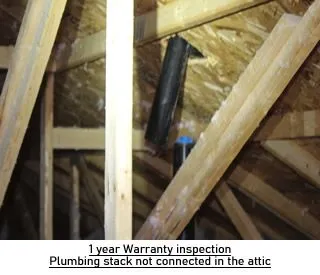
4. Poor Air Sealing Around Penetrations
Insulation does not stop air movement.
If gaps exist around:
- Plumbing stacks.
- Electrical wiring.
- Recessed lights.
- Attic hatches.
Warm air can bypass insulation entirely.
Air leakage undermines insulation effectiveness.
Why Adding Insulation Alone Isn’t Always the Answer
Homeowners sometimes assume that simply adding more insulation solves problems.
But without addressing:
- Air sealing.
- Ventilation balance.
- Moisture pathways.
Additional insulation may not resolve the underlying issue.
In some cases, excessive insulation without airflow management can even worsen moisture conditions.
Performance requires system balance.
Seasonal Patterns I Observe in Stittsville and Kanata
Attic insulation problems often follow predictable seasonal symptoms:
Winter:
- Ice dams.
- Frost in attic.
- High heating bills.
Spring:
- Damp insulation from melt.
- Mold spotting visible.
- Ceiling staining.
Summer:
- Overheated upper floors.
- Air conditioning strain.
- Humidity buildup.
Fall:
- Increased drafts.
- Temperature imbalance before heating season begins.
Recognizing these patterns helps identify insulation deficiencies early.
What I Evaluate During Attic Inspections
When inspecting attic insulation in Stittsville and Kanata homes, I assess:
- Insulation depth and uniformity.
- Coverage consistency.
- Signs of moisture.
- Air sealing around penetrations.
- Ventilation intake and exhaust balance.
- Attic hatch insulation quality.
- Ice dam history indicators.
- Roof sheathing condition.
Insulation performance cannot be evaluated by thickness alone.
It requires examining how all components interact.
Why Early Correction Prevents Compounding Damage
Improper attic insulation rarely causes catastrophic failure overnight.
But over time, it can contribute to:
- Roof deck deterioration.
- Mold remediation needs.
- Energy inefficiency.
- Interior finish damage.
- Structural stress patterns.
Addressing insulation performance early is significantly less costly than repairing long-term moisture damage.
Final Thoughts: Attic Insulation Affects the Entire House
In Stittsville and Kanata homes, improper attic insulation doesn’t create one isolated issue.
It creates a chain reaction.
Heat imbalance leads to ice dams.
Ice dams lead to moisture intrusion.
Moisture intrusion leads to mold or sheathing damage.
Energy loss leads to HVAC strain.
Humidity imbalance affects comfort.
The attic sits at the top of the home — and what happens there influences everything below.
Insulation must be:
- Continuous.
- Properly installed.
- Paired with effective air sealing.
- Balanced with ventilation.
When those elements work together, homes perform well.
When they don’t, small deficiencies repeat season after season until they become visible.
And in our climate, repetition is what causes long-term damage.