

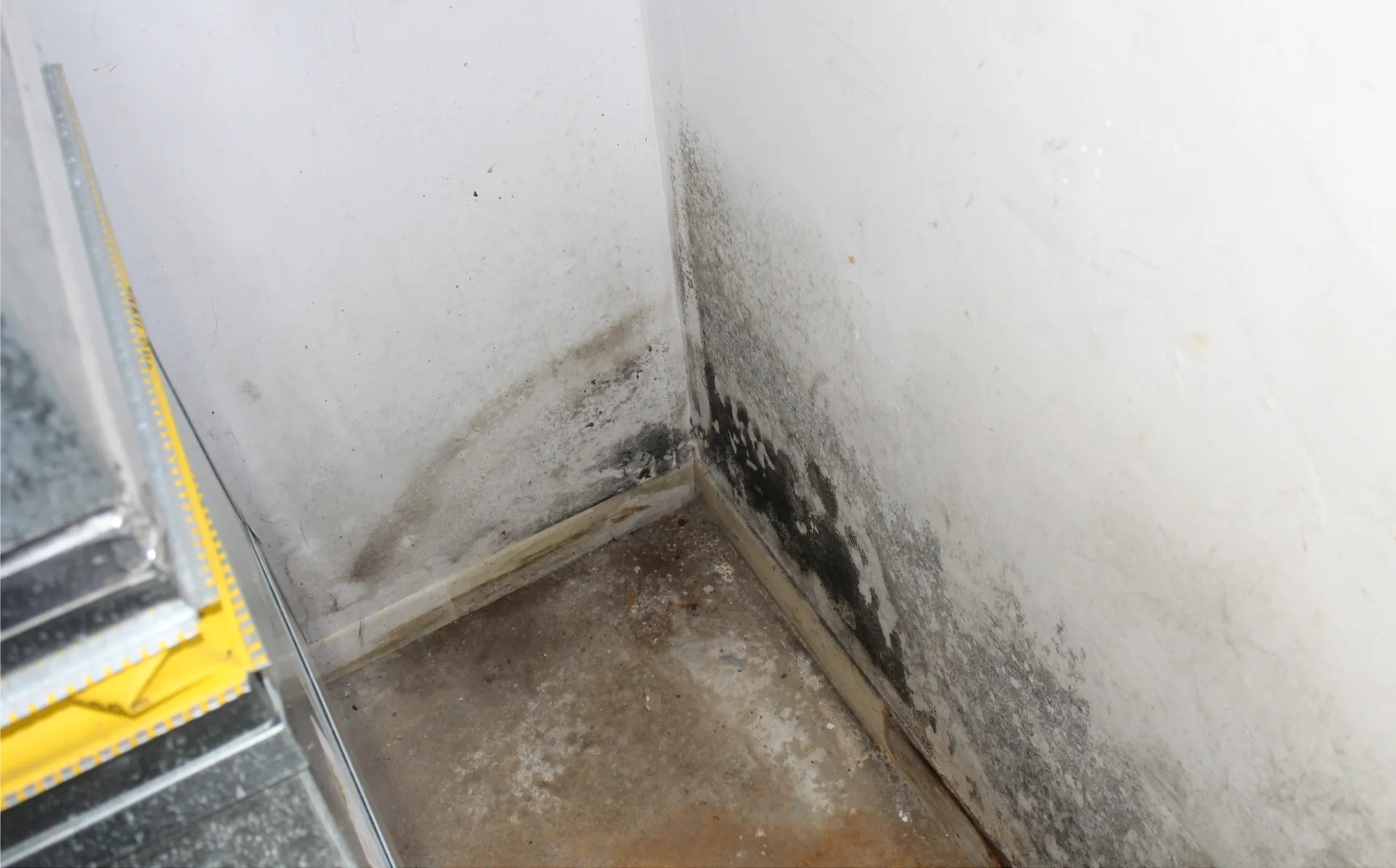
When people think about air quality problems in a home, they usually think about basements, ventilation systems, or maybe humidity inside living areas.
Very few think about crawlspaces.
But after inspecting homes across Orleans and Rockland for years, I can say confidently that crawlspace air quality often reveals long-term moisture conditions long before homeowners see visible structural damage.
Crawlspaces are quiet environments. They don’t get daily traffic. They aren’t routinely cleaned or monitored. And because they’re out of sight, small environmental shifts can persist there for years without drawing attention.
What makes crawlspaces so important in Orleans and Rockland is this:
They sit directly between the soil and the home.
And soil in this region is active — especially clay-heavy soil that responds dramatically to moisture changes throughout the year.
In this guide, I’ll explain how crawlspace air quality reveals long-term moisture behavior, why Orleans and Rockland homes are especially susceptible, the subtle warning signs I look for during inspections, and why air quality clues often show up before visible damage does.
Why Crawlspaces Behave Differently Than Basements
Crawlspaces are typically:
- Shallower than basements
- Closer to exposed soil
- Less insulated
- Less mechanically ventilated
- More influenced by outdoor humidity
Unlike basements, which are usually surrounded by full concrete walls and often equipped with drainage systems, crawlspaces frequently rely on simpler moisture management strategies.
Many crawlspaces in Orleans and Rockland have:
- Exposed earth floors
- Thin vapor barriers
- Perimeter vents
- Minimal airflow control
That makes them highly sensitive to seasonal moisture changes.
Orleans and Rockland Soil: A Moisture Amplifier
Clay-rich soils in Orleans and Rockland expand when wet and contract when dry. This expansion-contraction cycle repeats annually.
When soil becomes saturated during:
- Spring snowmelt
- Heavy summer rainfall
- Fall precipitation
…it releases moisture upward through vapor diffusion.
Even if there is no standing water in a crawlspace, the soil beneath it may be constantly releasing moisture into the air.
Over time, this affects crawlspace air quality first — structure second.
The Stack Effect: Why Crawlspace Air Moves Upward
Homes naturally experience something called the stack effect.
In colder months:
- Warm air rises inside the house.
- Negative pressure forms at lower levels.
- Air is drawn upward from crawlspaces into living spaces.
This means that whatever is in the crawlspace air can eventually enter the home.
If crawlspace air is damp, musty, or contaminated with mold spores, that air doesn’t stay confined.
It migrates.
Crawlspace air quality is not isolated. It influences the entire home.
The First Sign: Persistent Musty Odors
One of the earliest indicators of long-term crawlspace moisture is odor.
Homeowners in Orleans and Rockland sometimes report:
- A faint musty smell near floor vents
- Odors strongest during spring or summer
- Air that feels “heavy” after rainfall
- A damp smell in closets near exterior walls
These odors often originate in crawlspaces.
Moisture encourages microbial growth in insulation, wood framing, and organic debris. Even if mold is not visibly widespread, microbial activity can create noticeable air quality changes.
Odor is often the first clue.
Elevated Humidity Without Visible Water
Another common pattern I see is elevated indoor humidity without obvious leaks.
Crawlspaces with long-term soil moisture exposure often have:
- Relative humidity levels consistently above safe thresholds
- Insulation absorbing ambient dampness
- Wood framing retaining elevated moisture content
Homeowners may notice:
- Windows fogging more often
- Dehumidifiers running frequently
- Floors feeling cooler and slightly damp
High crawlspace humidity doesn’t require flooding. It requires persistent soil moisture release.
Insulation as an Air Quality Indicator
Crawlspace insulation often reveals long-term moisture conditions.
During inspections, I look for:
- Sagging fiberglass batts
- Insulation compressed against subflooring
- Dark staining on insulation backing
- Insulation falling from joists
Fiberglass absorbs airborne moisture. When it becomes damp repeatedly, it loses structure and performance.
Damp insulation doesn’t just reduce energy efficiency — it becomes a host environment for mold spores.
Air quality declines long before structural decay becomes severe.
Wood Framing Moisture Content
Wood framing in crawlspaces acts like a moisture barometer.
Using moisture meters during inspections, I evaluate:
- Joist moisture levels
- Beam moisture consistency
- Rim joist exposure near exterior walls
Long-term elevated moisture content in framing may not cause immediate rot, but it creates conditions where fungal growth can begin.
Slightly elevated wood moisture, sustained over years, reduces durability.
Crawlspace air quality issues often reflect this prolonged exposure.
Ventilation Misconceptions in Crawlspaces
Many older crawlspaces in Orleans and Rockland rely on perimeter vents to “dry” the space.
But this strategy can backfire.
In summer:
- Warm, humid outdoor air enters the crawlspace.
- It contacts cooler surfaces.
- Condensation forms.
Instead of drying the crawlspace, ventilation can increase humidity.
In winter:
- Cold outdoor air lowers crawlspace temperature.
- Warm air from above condenses when it leaks downward.
Ventilation without control often worsens air quality.
Vapor Barrier Condition Tells a Long-Term Story
A vapor barrier is meant to block soil moisture from evaporating upward.
In many homes, I find:
- Torn plastic sheeting
- Thin vapor barriers deteriorated over time
- Gaps at seams
- Barriers not sealed to foundation walls
When vapor barriers fail, soil moisture rises freely into crawlspace air.
Even if the space looks dry, elevated humidity persists.
The condition of the vapor barrier often explains air quality symptoms.
Condensation on Ductwork and Plumbing
Crawlspaces often contain:
- HVAC ducts
- Cold water lines
- Drain pipes
When humid crawlspace air contacts cooler surfaces, condensation forms.
I frequently see:
- Water droplets on duct insulation
- Rusting metal hangers
- Drip marks beneath pipes
- Damp insulation near mechanical runs
Condensation adds moisture to the space, compounding the cycle.
Air quality declines as humidity increases.
Mold Growth in Early Stages
Crawlspace mold doesn’t always appear dramatic.
Early-stage growth may look like:
- Light gray spotting on joists
- Faint black speckling
- White fuzzy patches
- Mold concentrated near exterior walls
Even small mold colonies release spores into the air.
These spores migrate upward through the stack effect.
Homeowners may experience:
- Allergy symptoms
- Irritated sinuses
- Worsened asthma
Crawlspace mold often develops before visible structural decay.
Why Long-Term Moisture Is Often Seasonal
In Orleans and Rockland, crawlspace moisture fluctuates seasonally.
Spring:
- Snowmelt saturates soil.
- Groundwater levels rise.
- Humidity increases.
Summer:
- Warm air introduces moisture through vents.
- Condensation forms on cooler surfaces.
Fall:
- Rainfall increases soil saturation.
- Drying slows as temperatures drop.
Winter:
- Stack effect intensifies upward airflow.
- Moisture migrates into attic spaces.
This cycle repeats annually.
Over time, repeated exposure affects air quality even if no flooding occurs.
The Impact on Flooring Above
Crawlspace moisture often affects the floors above.
Homeowners may notice:
- Slight floor cupping
- Hardwood warping
- Cold floor surfaces
- Increased squeaking
Wood flooring absorbs moisture from below.
Subtle floor changes often reflect crawlspace air conditions.
Why Buyers Rarely Inspect Crawlspaces Closely
Crawlspaces are:
- Tight
- Dark
- Dusty
- Inconvenient to access
During showings, buyers rarely enter them.
Even when visible during inspection, early moisture signs can be subtle.
Air quality issues require careful evaluation.
Without inspection experience, they’re easy to overlook.
Long-Term Consequences of Ignoring Crawlspace Moisture
Persistent crawlspace moisture can lead to:
- Structural wood rot
- Mold remediation costs
- Insulation replacement
- Increased heating bills
- Indoor air quality degradation
- Decreased resale confidence
Addressing moisture early is significantly less expensive than correcting structural damage later.
What I Evaluate During Crawlspace Air Quality Inspections
When inspecting crawlspaces in Orleans and Rockland properties, I assess:
- Relative humidity levels
- Vapor barrier condition
- Insulation integrity
- Wood moisture content
- Mold presence
- Ventilation configuration
- Air leakage pathways
- Exterior grading impact
- Soil moisture exposure
Crawlspace evaluation is about patterns — not just visible water.
Final Thoughts: Crawlspace Air Quality Is a Long-Term Moisture Indicator
In Orleans and Rockland homes, crawlspace air quality often reveals moisture behavior long before homeowners see visible water damage.
The signs are subtle:
- Musty odors
- Elevated humidity
- Insulation sagging
- Light mold spotting
- Condensation on ducts
- Slight floor changes
Crawlspaces are influenced by soil, climate, ventilation, and time.
Moisture doesn’t need to flood a space to cause long-term impact.
It only needs to persist.
And when crawlspace air quality begins to change, it’s often the earliest sign that the home’s moisture balance deserves closer attention.