

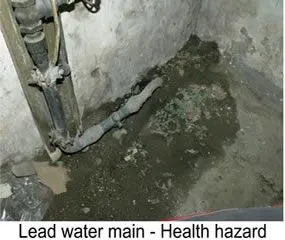
Water supply lines are easy to take for granted.
Turn on a faucet and water appears. Flush a toilet and the tank refills. Start the washing machine and water flows automatically. Because these systems normally operate quietly behind the scenes, many buyers do not think much about the pipes carrying water throughout the home.
During a home inspection, I do.
The plumbing system is one of the major systems typically included in a visual home inspection in Ontario, including visible portions of the water supply and distribution system.
During a Home Inspection Ottawa or Home Inspection Kemptville, I look carefully at accessible water supply lines because even a relatively small leak can affect cabinets, flooring, drywall, framing, insulation, and other surrounding materials.
I am not simply looking for water dripping from a pipe.
I look at the piping material, visible connections, corrosion, staining, supports, shutoff valves, previous repairs, moisture evidence, and how the system performs when fixtures are operated.
Most importantly, I look for patterns.
One minor observation under a sink may be routine maintenance.
Repeated corrosion, multiple previous repairs, poor functional flow, and moisture staining throughout a home may tell a different story.
My job is to help buyers understand that difference.
Why Water Supply Lines Deserve Attention
Supply piping is under pressure.
That makes it different from drainage piping.
A drain normally carries water away when a fixture is being used. A pressurized supply line may contain water continuously.
If a supply connection begins leaking, water can continue escaping until the problem is discovered or the supply is shut off.
That is why I take even small signs of leakage seriously.
I do not automatically treat every small drip as a major emergency, but I want buyers to know where it is, what appears to be affected, and whether further repair is appropriate.
I Start by Identifying Visible Supply Piping
Where piping is accessible, I look at what type of material appears to be installed.
Different homes can contain different materials depending on:
- Age
- Renovation history
- Original construction
- Previous plumbing work
- Additions
Sometimes more than one type of supply piping is visible in the same home.
That is not automatically a problem.
It may simply reflect renovations or repairs completed at different times.
I Look at the System as a Whole
I do not inspect one pipe and assume it represents the entire plumbing system.
I look at accessible piping in multiple areas.
That can include:
- Basement
- Mechanical room
- Under sinks
- Bathrooms
- Kitchen
- Laundry room
- Utility areas
- Near the water heater
This gives me a better understanding of the visible plumbing system.
I Look for Active Leaks
An active leak is one of the most straightforward plumbing findings.
I look for:
- Dripping
- Beading water
- Wet connections
- Damp surfaces
- Water collecting below piping
Sometimes a leak is obvious.
Other times it may only become noticeable after a fixture has been operated.
I Run Fixtures Where Appropriate
During the inspection, accessible installed plumbing fixtures are generally operated using their normal controls.
This allows me to observe how the visible system behaves under ordinary use.
Ontario home-inspection standards and guidance commonly include inspection of interior water supply and distribution systems, fixtures, and faucets.
I may run water at sinks, showers, tubs, and other accessible fixtures while watching nearby plumbing.
I Look Under Sinks While Water Is Running
The cabinet under a sink can provide valuable information.
I look at:
- Supply connections
- Shutoff valves
- Faucet connections
- Drain connections
- Cabinet base
- Back wall
- Nearby finishes
If a small leak only occurs while the faucet is operating, watching the plumbing during use may reveal it.
I Look for Slow Leaks
Not every leak produces a visible stream of water.
A slow leak may appear as:
- A single droplet
- Dampness around a fitting
- Mineral buildup
- Corrosion
- Discoloration
- Swollen cabinet material
These small clues can be important.
I Look for Water Staining
A supply line may be dry during the inspection but still show evidence of a previous leak.
I look for staining on:
- Cabinet floors
- Walls
- Ceilings
- Framing
- Shelving
- Flooring
Staining does not automatically mean the leak is still active.
I distinguish between historical evidence and current moisture whenever possible.
Old Damage and Active Leakage Are Different
This distinction matters to buyers.
A cabinet may show old staining from a faucet that was repaired years ago.
That is very different from finding fresh moisture beneath an actively leaking connection.
I look at the condition of the material and surrounding plumbing before explaining the finding.
I Look for Corrosion
Corrosion around supply piping and fittings can provide useful information.
I may see it around:
- Valves
- Fittings
- Connections
- Water heater piping
- Fixture supply lines
A small amount of surface discoloration does not necessarily mean failure is imminent.
However, significant corrosion or evidence of leakage deserves attention.
Mineral Deposits Can Be a Clue
Mineral deposits around a fitting can sometimes indicate that small amounts of water have escaped and evaporated over time.
If I see buildup around a connection, I inspect it carefully.
The connection may be dry during the inspection but still deserve repair or monitoring.
I Look at Pipe Connections
Changes in direction and transitions between materials create connections.
I inspect visible joints for:
- Leakage
- Corrosion
- Unusual repairs
- Poor support
- Deterioration
I do not dismantle fittings.
This is a visual, non-invasive inspection.
I Pay Attention to Material Transitions
Renovated homes may have newer piping connected to older piping.
That is not automatically a concern.
I look at how the visible transition has been made and whether there is any evidence of leakage, corrosion, or improvised workmanship.
I Look for Improvised Repairs
Sometimes I encounter plumbing that appears to have been repaired temporarily rather than permanently.
I may see:
- Unusual clamps
- Excessive patching
- Unsupported piping
- Makeshift connections
- Repeated repairs in one area
I do not assume why the work was done.
I simply evaluate the visible condition and recommend appropriate professional review when needed.
Pipe Supports Matter
Supply piping should not simply hang loosely wherever it happens to run.
Where visible, I look at support.
Poorly supported piping can move, vibrate, sag, or place unnecessary stress on connections.
The significance depends on the material and location.
I Look for Movement When Fixtures Operate
In some homes, supply piping may move noticeably when water is turned on or off.
This can sometimes produce banging or other sounds.
I listen for unusual plumbing noise while operating fixtures.
Noise alone does not allow me to diagnose the exact cause, but it may indicate that further evaluation is worthwhile.
I Look at Shutoff Valves
Fixture shutoff valves are useful because they allow water to be isolated locally when repairs are needed.
I look for accessible valves beneath sinks, near toilets, and at other visible fixtures.
I consider:
- Corrosion
- Leakage
- Physical condition
- Accessibility
I generally avoid unnecessarily operating older or questionable shutoff valves during a standard inspection because a deteriorated valve can begin leaking when disturbed.
I Identify the Main Water Shutoff When Accessible
Knowing where the main water shutoff is located can be extremely important after moving in.
If a supply line fails, quickly shutting off the water can limit damage.
Where readily accessible, I identify the main shutoff for buyers.
Home inspection standards commonly include identifying the location of the main water shutoff where practical.
Buyers Should Know the Shutoff Location Before an Emergency
The worst time to start searching for the main water shutoff is when water is already spreading across the floor.
I encourage buyers to know:
- Where the valve is
- How to access it
- Which household members know its location
If operation needs to be verified, that can be done appropriately with a qualified plumbing professional.
I Look Around Toilets
Toilets require a water supply connection.
I inspect visible supply components for:
- Leakage
- Corrosion
- Damaged connections
- Moisture
I also look at the floor and surrounding finishes.
A wet area near a toilet can have several possible sources, so I do not automatically blame the supply line.
Toilet Moisture Can Come From Different Places
Water around a toilet might relate to:
- Supply connection
- Shutoff valve
- Tank connection
- Condensation
- Fixture leakage
- Base leakage
I look at the pattern before identifying the likely concern.
I Inspect Bathroom Vanities
Vanity cabinets can conceal small leaks for surprisingly long periods.
Because the doors remain closed much of the time, homeowners may not notice moisture immediately.
I look at the cabinet base for:
- Staining
- Swelling
- Delamination
- Dampness
- Previous repairs
The condition of the cabinet sometimes tells me as much as the piping.
I Look at Kitchen Sink Supply Lines
Kitchen cabinets experience regular plumbing use.
I inspect visible hot and cold supply connections beneath the sink.
I also consider other equipment that may share the area, such as a dishwasher connection or water filtration equipment where visible.
A crowded cabinet can make leaks harder for homeowners to notice.
I Look Around Refrigerators Where Accessible
Some refrigerators have water supply lines for ice makers or water dispensers.
Where accessible and within the inspection scope, I look for visible evidence of leakage or damage around the supply connection.
However, much of this piping may be concealed behind the appliance.
I do not move heavy appliances simply to inspect hidden plumbing.
Concealed Refrigerator Leaks Can Affect Flooring
A small leak behind a refrigerator may continue unnoticed because the area is rarely visible.
Possible clues can include:
- Flooring damage
- Staining
- Swelling
- Moisture at nearby finishes
I investigate visible evidence without assuming a concealed leak exists.
I Inspect Laundry Areas
Washing machines use significant amounts of water.
The supply connections deserve attention.
Where visible and accessible, I look at:
- Supply valves
- Connections
- Hoses
- Wall area
- Floor
- Signs of previous leakage
I do not necessarily operate washing-machine valves or appliances as part of a standard inspection.
Laundry Supply Hoses Deserve Respect
A washing machine connection can release a substantial amount of water if it fails.
I encourage homeowners to know the condition of accessible hoses and connections and to follow appropriate manufacturer guidance for maintenance and replacement.
If something appears deteriorated, repair should not be unnecessarily postponed.
I Look at Utility Sinks
Utility and laundry sinks may not receive the same cosmetic attention as kitchen and bathroom fixtures.
That sometimes means leaks remain unnoticed longer.
I inspect visible supply connections and the surrounding area.
I Inspect Water Heater Connections
The water heater is another important part of the supply system.
I look at visible water connections for:
- Leakage
- Corrosion
- Staining
- Deterioration
- Previous repairs
I also inspect the water heater itself within the scope of the home inspection.
Corrosion Near a Water Heater Deserves Context
Corrosion around water heater piping can have several possible causes.
I consider:
- Connection leakage
- Condensation
- Age
- Nearby plumbing
- Other visible evidence
I avoid diagnosing the cause from one small mark.
I Look at Basement Supply Lines
Unfinished basements often provide excellent visibility.
I may be able to see supply piping running beneath the floor structure and branching toward different fixtures.
This gives me an opportunity to inspect:
- Piping material
- Supports
- Connections
- Corrosion
- Previous repairs
- Leakage
Visibility is valuable.
Finished Basements Limit What I Can See
A finished basement may conceal most plumbing behind drywall and ceilings.
That creates an important inspection limitation.
A home inspection is visual and non-invasive. Government guidance similarly describes home inspections as visual examinations and notes that inaccessible or concealed areas cannot be fully evaluated.
I do not cut holes in ceilings or walls to inspect concealed supply lines.
No Visible Leak Does Not Guarantee Concealed Plumbing Is Perfect
This is an important distinction.
If the visible plumbing is dry and the finished surfaces show no moisture evidence, that is positive.
But I cannot guarantee the condition of every pipe hidden inside the walls.
I explain that limitation clearly.
I Look at Ceilings Below Bathrooms
Even when plumbing is concealed, surrounding finishes may provide clues.
If an upstairs bathroom is located above a finished ceiling, I look for:
- Staining
- Patches
- Bubbling paint
- Discoloration
- Sagging
A ceiling stain does not automatically identify the source.
It tells me that the area deserves closer attention.
I Compare Upper and Lower Floors
Understanding the home’s layout helps.
If I see staining on a ceiling, I consider what is directly above it.
Is there:
- A bathroom?
- Kitchen plumbing?
- Laundry?
- Water supply piping?
This relationship can help narrow the possibilities.
I Look at Plumbing Near Exterior Walls
Water supply piping located in colder areas deserves attention.
Ottawa and Kemptville experience freezing winter temperatures.
Piping located in poorly insulated exterior areas may be more vulnerable to freezing.
I look for visible conditions that suggest piping may be exposed to cold.
I Look at Plumbing in Garages
If water lines run through or near an attached garage, I consider their location and visible insulation.
Garages can become significantly colder than conditioned living spaces.
The exact risk depends on construction and heating conditions.
Crawl Spaces Can Contain Supply Lines
Some homes, additions, or rural properties may have crawl spaces.
Where safely accessible, I inspect visible plumbing for:
- Leakage
- Corrosion
- Support
- Insulation
- Physical damage
Crawl spaces can be particularly important because plumbing problems may remain unnoticed.
Kemptville Homes Can Have Different Water Supply Arrangements
Depending on the property, a Kemptville home may be connected to municipal services or use a private water system.
The visible interior distribution piping still deserves inspection either way.
However, private wells and related equipment introduce additional considerations that may go beyond a basic visual plumbing inspection.
Where specialized testing is appropriate, I explain that separately.
Water Quality Is Different From a Visual Plumbing Inspection
A home inspection does not determine whether water is safe to drink simply by looking at the pipes.
Water quality testing is a separate process.
This distinction is especially important when a property uses a private well.
I do not make water-quality claims based solely on visual plumbing observations.
I Observe Functional Water Flow
When operating fixtures, I pay attention to how water appears to flow.
If one fixture has noticeably poor flow, I consider whether the issue appears localized.
If several fixtures show similar performance, that may suggest a broader condition worth investigating.
This is an observational assessment, not a full hydraulic analysis.
I May Compare Multiple Fixtures
Operating more than one fixture can provide useful information about functional flow.
Home inspection standards commonly recognize functional flow as part of evaluating the visible plumbing system, while distinguishing that from exact pressure or capacity testing.
I use what I observe to help buyers understand whether anything unusual is apparent.
Flow and Pressure Are Not Exactly the Same Thing
Buyers sometimes describe any weak faucet as “low water pressure.”
The actual cause can be more complicated.
Reduced performance at a fixture may relate to:
- Fixture aerators
- Valves
- Pipe restrictions
- Supply conditions
- Plumbing configuration
- Other factors
I describe what I observe rather than claiming an exact cause without sufficient evidence.
I Look for Differences Between Hot and Cold Water
When operating fixtures, I may compare hot and cold functional flow.
A noticeable difference can provide useful information.
Again, I do not automatically diagnose the internal cause during a visual inspection.
One Weak Faucet May Be a Local Issue
If every fixture performs normally except one bathroom sink, that may point toward a localized issue rather than a whole-house supply problem.
This is why I operate multiple fixtures.
Patterns matter.
Several Weak Fixtures Deserve More Attention
If poor functional flow appears throughout the home, I take a broader look at the visible supply system.
Further plumbing evaluation may be appropriate depending on the severity and circumstances.
I Look for Older Plumbing Materials
Older Ottawa homes may contain plumbing materials from different periods.
Age alone does not allow me to predict exactly when a pipe will fail.
Instead, I consider:
- Material
- Visible condition
- Corrosion
- Leakage
- Functional performance
- Repair history
This gives buyers more useful information than simply labeling something “old.”
Renovations Can Create Mixed Plumbing Systems
A renovated home may contain newer supply piping in the kitchen and bathrooms while older piping remains elsewhere.
That is common.
I try to identify the visible materials without assuming that concealed areas were upgraded at the same time.
A Renovated Bathroom Does Not Guarantee New Supply Lines Everywhere
New tile, fixtures, vanity, and faucets can make a bathroom look completely new.
But some plumbing behind the finished surfaces may remain from the original construction.
Unless it is visible or documentation is available, I cannot confirm what is concealed.
This is an important limitation for buyers to understand.
I Look for Previous Plumbing Work
Previous repairs are not automatically negative.
Plumbing requires maintenance over the life of a home.
I am interested in whether the visible work appears to be performing without leakage or other obvious concerns.
Repeated Repairs Can Tell a Story
If I see numerous repairs concentrated along one section of piping, I take note.
It may indicate that the system has required ongoing maintenance.
That does not allow me to predict future failure, but it can be useful information for buyers.
I Look for Moisture Damage Around Pipe Penetrations
Supply lines often pass through:
- Cabinets
- Floors
- Walls
- Framing
I inspect accessible areas around these penetrations for staining or deterioration.
Sometimes the pipe itself is dry while surrounding materials reveal a previous problem.
I Look for Mold-Like Discoloration Without Diagnosing It
Moisture can contribute to biological growth on surrounding materials.
If I observe suspicious discoloration, I document what I can see.
A standard home inspection is not laboratory testing, and I do not identify a substance as mould solely by appearance.
Further evaluation may be appropriate when conditions warrant it.
I Pay Attention to Swollen Cabinet Materials
Particleboard and similar cabinet materials can swell after water exposure.
If the base beneath a sink is distorted or delaminating, I look carefully at nearby supply and drain connections.
The leak may be current or historical.
Flooring Can Reveal Plumbing History
Water escaping from a supply line can affect nearby flooring.
Depending on the material, I may see:
- Swelling
- Discoloration
- Separation
- Buckling
- Soft areas
I compare the damage with nearby plumbing before drawing conclusions.
Fresh Finishes Do Not Automatically Concern Me
A recently painted ceiling or new cabinet base does not prove a leak was hidden.
Homes are routinely renovated before sale.
I simply look for additional evidence.
I do not make accusations without support.
I Look at the Main Supply Entry
Where visible, I inspect the area where the water service enters the home.
I look at accessible piping, connections, and surrounding conditions.
Much of the service line itself is underground and therefore outside what I can visually inspect.
Underground Water Lines Are a Limitation
I cannot see the buried service line between the home and the municipal connection or well simply during a standard visual inspection.
The visible interior system may perform normally while concealed or underground components remain inaccessible.
I make that limitation clear.
I Do Not Operate Every Valve
Buyers sometimes expect a home inspector to turn every plumbing valve in the house.
That is not necessarily appropriate.
Older valves can begin leaking after being disturbed.
Some inspection standards specifically exclude operating every valve from the required scope.
I inspect visible condition and use normal fixture controls while avoiding actions that could unnecessarily create damage.
I Do Not Predict Exact Remaining Pipe Life
A pipe does not come with a visible countdown clock.
Even when I know the material and approximate age, I cannot tell a buyer that a particular pipe will fail in a specific number of years.
I can explain visible condition, known maintenance considerations, and whether further evaluation is advisable.
I Do Not Treat a Home Inspection as a Plumbing Code Inspection
A standard home inspection is primarily about visible condition and function.
It is not a comprehensive plumbing code-compliance inspection.
Ontario’s own consumer guidance similarly describes home inspection as a visual examination and specifically notes that it is not a pass-or-fail assessment of whether a home complies with building codes.
That distinction helps keep the inspection focused on practical buyer information.
I Look for Patterns Instead of Isolated Imperfections
This is one of the most important principles in my inspection process.
Imagine I find one small corroded valve under a bathroom sink.
That may simply be a localized maintenance item.
Now imagine I find:
- Corroded valves throughout the house
- Mineral deposits at multiple connections
- Several previous repairs
- Weak functional flow
- Water staining in multiple cabinets
That broader pattern deserves more attention.
I Separate Routine Maintenance From Significant Concerns
Not every plumbing observation should receive the same priority.
Routine items may include:
- A minor valve leak
- A loose support
- An aging fixture connection
More significant concerns may include:
- Active leakage affecting surrounding materials
- Extensive corrosion
- Repeated plumbing failures
- Significant functional flow concerns
- Widespread deterioration
I help buyers understand where the visible condition falls on that spectrum.
Small Leaks Should Not Be Ignored
A slow drip may not look dramatic during a two or three-hour inspection.
But plumbing systems remain in the home every day.
Repeated moisture can eventually damage surrounding materials.
That is why I recommend repairing active leaks rather than simply placing a container underneath them and forgetting about the problem.
Buyers Should Know Where Their Plumbing Is
One benefit of attending the inspection is learning how the home works.
I can show buyers:
- Main shutoff location
- Visible supply materials
- Important valves
- Water heater connections
- Areas that deserve monitoring
This practical knowledge can be extremely useful after moving in.
I Encourage Buyers to Attend the Inspection
Whenever possible, I encourage buyers to attend their Home Inspection Ottawa or Home Inspection Kemptville.
Ontario consumer guidance also recommends that buyers attend so they can ask questions and see issues firsthand.
A plumbing concern often makes much more sense when I can show it in person.
A photograph of corrosion is useful.
Seeing exactly where that valve is located and what it serves is even better.
The Inspection Report Creates a Useful Baseline
After closing, buyers can use the inspection report as a maintenance reference.
If I document:
- A small stain
- An aging valve
- Corrosion
- A previous repair
- A supply-line concern
the homeowner can monitor that area.
If conditions change, the original report provides useful context.
Homeowners Should Occasionally Look Under Their Sinks
One of the simplest maintenance habits is opening sink cabinets occasionally and looking inside.
Check for:
- Dampness
- New staining
- Drips
- Corrosion
- Swollen materials
Small plumbing leaks are easier to manage when discovered early.
Laundry Areas Deserve Regular Attention Too
Because washing-machine supply connections are often hidden behind the appliance, they can be forgotten.
Homeowners should periodically look for visible moisture and follow manufacturer recommendations for hoses and equipment.
Know How to Shut the Water Off
This may be the most practical plumbing advice I give buyers.
If a supply line suddenly fails, knowing how to stop the water quickly can make a significant difference.
Do not wait until an emergency to learn where the shutoff is.
Home Inspection Cost Should Be Viewed in Context
Buyers searching for Home Inspection Cost, Home Inspection Ottawa Cost, Home Inspection Price, or Affordable Home Inspection Near Me understandably want to know what an inspection costs.
But plumbing illustrates why inspection value goes beyond a checklist.
A tiny drip may seem insignificant.
If it has been affecting a cabinet for months, the surrounding damage can become more important than the fitting itself.
A visible pipe may look fine.
But poor functional flow throughout the home can suggest something deserves additional investigation.
The value comes from connecting those observations.
Why Experience Matters With Water Supply Lines
Plumbing findings require context.
Corrosion does not automatically mean immediate failure.
A stain does not automatically mean an active leak.
Weak flow at one fixture does not automatically mean the entire plumbing system is defective.
And a newly renovated bathroom does not prove all concealed piping is new.
I look at the evidence collectively.
What I Want Ottawa and Kemptville Buyers to Understand
Before closing, I want buyers to know whether I observed:
- Active supply leaks
- Corroded connections
- Mineral buildup
- Damaged piping
- Poor support
- Questionable repairs
- Valve deterioration
- Water staining
- Moisture-damaged cabinets
- Unusual functional flow
- Mixed plumbing materials
- Areas where visibility was limited
More importantly, I want buyers to understand the significance of those observations.
A Plumbing System Does Not Need to Be New to Perform Well
Older homes can have plumbing that remains functional.
Newer homes can still develop leaks.
Age is useful context, but visible condition and performance matter more during the inspection.
I am not searching for a house where every pipe was installed yesterday.
I am looking for evidence of how the system is performing today.
Final Thoughts
Water supply lines are among the least noticeable components of a home until something goes wrong.
That is exactly why I give them careful attention during a Home Inspection Ottawa or Home Inspection Kemptville.
I inspect accessible visible portions of the water distribution system, look at piping materials, examine connections, watch for corrosion and mineral deposits, inspect shutoff valves, look for moisture staining, operate fixtures using normal controls, and observe functional water flow.
I also inspect the surrounding materials.
Sometimes the pipe tells me there is a problem.
Sometimes the cabinet beneath it tells me first.
Sometimes it is a ceiling stain below an upstairs bathroom.
Sometimes it is corrosion around a fitting that is currently dry.
And sometimes several individual clues combine into a pattern that deserves further professional evaluation.
That is why I do not reduce plumbing inspection to simply turning on faucets.
A proper visual home inspection looks at the plumbing system in context. Ontario and Canadian consumer guidance recognize plumbing as one of the major systems evaluated during a home inspection while also emphasizing that the inspection is visual and limited to accessible conditions.
For buyers searching for Home Inspection Ottawa, Home Inspection Kemptville, Home Inspection Near Me, Home Inspection Cost, Home Inspection Ottawa Cost, Home Inspection Price, Home Inspections Ontario, Best Home Inspector Ottawa, Best Home Inspection Near Me, or Home Inspectors Ottawa Reviews, understanding the visible condition of the water supply system before closing can make future homeownership much more predictable.
I do not promise that a visual inspection can reveal every concealed plumbing problem.
It cannot.
I do not predict exactly when an older pipe will fail.
And I do not treat every corroded fitting as a major emergency.
Instead, I identify what is visible, explain what it means, distinguish maintenance from more significant concerns, and recommend further evaluation when the evidence justifies it.
A small supply line may be only a fraction of the home’s plumbing system, but when it carries pressurized water every hour of every day, its condition matters.
Understanding those lines before purchasing a home in Ottawa or Kemptville gives buyers another valuable piece of information they can use to protect the property, plan maintenance, and respond quickly if a plumbing problem develops after they move in.